National Seminars

State-Level Workshop on "Protect Girl Child & Promote Adoptions"

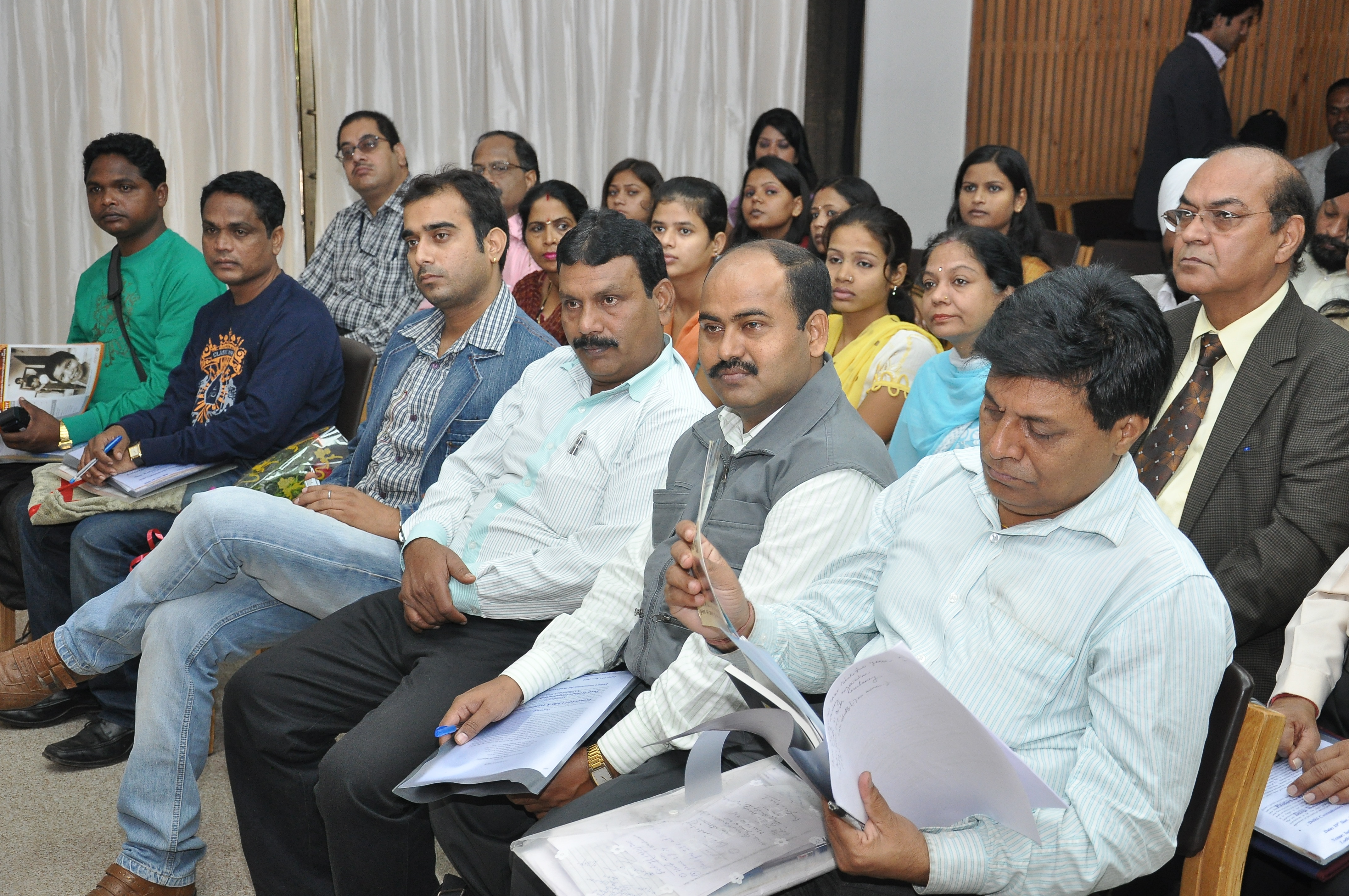
On 19th November 2010, Deep Welfare Organisation, in collaboration with the Delhi Commission for Protection of Child Rights (DCPCR), organized a full-day consultative workshop titled "Protect Girl Child & Promote Adoptions" at the India International Centre (IIC Annexe), Max Mueller Marg, New Delhi. Organized on the birth anniversary of Late Smt. Indira Gandhi, the workshop served as a state-level platform bringing together policymakers, statutory bodies, legal experts, academics, and grassroots practitioners to address the dual crises of declining child sex ratios and procedural bottlenecks in institutional adoption.
Home/National Seminars/State-Level Workshop on "Protect Girl Child & Promote Adoptions"
Year 2011National Academic Forum
Deep Welfare Organisation
State-Level Workshop on "Protect Girl Child & Promote Adoptions"
Symposium Proceedings

State-Level Workshop on "Protect Girl Child & Promote Adoptions"

Complete Seminar Proceedings & Overview

Official published transcript and proceedings of the national symposium.

The program opened with a ceremonial welcome and addresses emphasizing systemic accountability and civil society partnerships: Mr. Ajay Prakash (Secretary, Deep Welfare Organisation) framed the day's mandate, highlighting how deep-rooted son preference fuels sex-selective practices and advocating for girl child adoption as a critical societal priority. Mr. Amod K. Kanth (Chairperson, DCPCR & Founder, Prayas) delivered the presidential address, noting that the majority of DCPCR's ground interventions rely on voluntary organizations. He addressed the low conviction rates under sex selection laws, procedural delays in adoption execution—with only ~3,000 adoptions finalized annually in India at the time—and the need to streamline processes under the Juvenile Justice Act, 2000 and the Hindu Adoptions and Maintenance Act (HAMA) in alignment with UNCRC standards. Mr. N.N. Jha (Former Governor & Ambassador) and Mr. X.K. Mahto (Secretary, DCPCR) addressed socio-cultural drivers such as dowry and perceived old-age dependence, emphasizing the need to celebrate the girl child's agency and contributions. Technical Sessions & Thematic Deliberations Session I: Declining Child Sex Ratio & Critical Evaluation of Policy Schemes Mrs. Zeeshana Khan (Member, DCPCR) & Mr. M.M. Vidyarthi (Member, DCPCR) opened the floor on assessing why conventional efforts to protect the girl child often struggle to achieve sustained impact. Dr. Bijayalaxmi Nanda (Associate Professor, Miranda House, DU; Convener, CAFF) presented a comparative analysis titled "The Ladli Scheme in India: Leading to a Lehenga or a Law Degree?", evaluating conditional cash transfer programs across Delhi and Haryana and questioning whether institutional funds are channeled toward dowry/marriage expenses or higher educational attainment. Session II: Legal Implementation & Conviction Bottlenecks under the PC&PNDT Act Dr. Mansi Mishra shared ground findings from the 'Meri Shakti Meri Beti' project, noting that over 10 million girls had been lost to female feticide over two decades and highlighting targeted interventions across Delhi (Najafgarh, Punjabi Bagh, Narela). Ms. Aparna Dwivedi (Director - Women Justice, HRLN Delhi) highlighted critical enforcement gaps in the PC&PNDT Act, pointing to prolonged pendency in prosecution and the absence of deterrent prison sentences for violators. Hon'ble MP Shri Maheshwar Hazari addressed the house, calling for parliamentary prioritization and broad mindset transformation. Session III: Clarifying Provisions under the MTP Act Mr. Shashank Shekhar (Member, DCPCR) chaired the session, distinguishing between illegal sex-selective abortion and lawful medical termination under protected circumstances. Dr. P. Wanchoo (CMO – PNDT, Directorate of Family Welfare, Govt. of NCT of Delhi) highlighted that nearly 4 million unsafe or unauthorized terminations occur annually, leading to over 10,000 preventable maternal deaths. She outlined statutory grounds for lawful termination under the MTP Act (1971), including threats to maternal physical/mental health, rape, severe fetal abnormalities, and contraceptive failure. Session IV: Creating an Enabling Environment for Adoption in Delhi Mr. Vikram Dutt (Udayan Care) and Dr. Vinita Bhargava (President, CVARA Delhi) examined the procedural complexities of legal adoption and the societal stigma faced by adopted children in educational and social institutions. Mr. J. Pati (Deputy Director, CARA) detailed the institutional and statutory framework under the Central Adoption Resource Authority (CARA) and the Juvenile Justice Act, explaining the licensing and compliance mechanisms necessary for domestic and inter-country adoption agencies. Key Takeaways The workshop concluded with a unified call to harmonize adoption procedures, eliminate bureaucratic red tape for prospective adoptive parents, strictly enforce the PC&PNDT Act against illicit sex-determination clinics, and promote girl child adoption as a core pillar of gender equity and child rights protection.